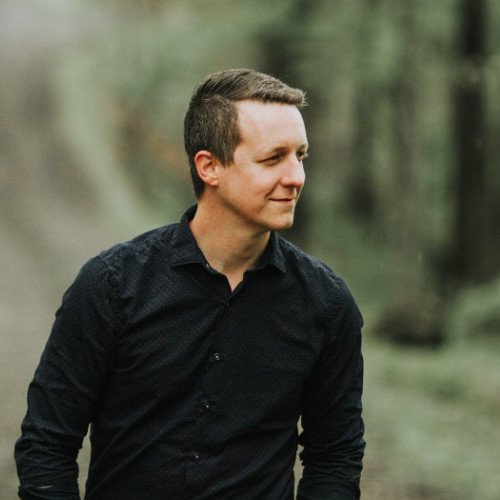
Hi, I'm Rob Milnes

AI-assisted by design: I replace fragmented engineering teams with a bespoke orchestration app that centralizes intent, constraints, code context, QA traces, and deployment signals into one massive shared context. I run multiple frontier models in parallel lanes, route each task to the best-fit specialist, enforce policy gates, and continuously hand off enriched context so architecture, implementation, validation, and release move as a synchronized system rather than disconnected workflows.

See how I can replace your entire engineering team. Scroll to Simulation
Simulating

Current Lifecycle Stage

Stage 01 • Idea

Design Prompt Simulation

Initial Idea Input
>

Runtime Metrics

Tokens used this round0
Context Files0
Active handoffs0
Context 0%

Stage Execution Flows

  • Prompt → Routerinitial intent
  • Router → Context Storepacket seed
  • Scheduler → Agentsawaiting start

Shared Instruction Broadcast

  • Router → GPT-5.4 Highintent packet
  • Context Store → GPT-5.3 Codexwaiting
  • Scheduler → Claude Sonnetidle

Rules and instructions are synchronized to every lane through a shared context bus.

Control App Rule

Initial prompt captured. The control app extracts intent, goals, and constraints before any downstream lane activates. if (prompt.received) { router.createIntentPacket(prompt); }

Scroll Down

About Me

Rob Milnes portrait

I started at 15 by building a flat HTML microsite to prove to myself I could ship something real. The first form failed because I couldn't process submissions, so I learned JavaScript. Then I realized processed data still didn't reach my inbox, so I taught myself PHP and mail handling. That loop of “build, break, learn, rebuild” became my operating system. By 18, I was delivering commercial websites in Sheffield, England, fully self-taught, with no university path.

I then built and operated a large MMORPG community by reverse engineering the game client and emulating a live-service backend to mirror official release behavior. That chapter forced deep systems thinking and pulled me into C++, C#, PHP, MySQL, JavaScript, networking, and server operations. I built custom game environments, moderation and management controls, and admin applications directly integrated with both server and client behavior.

Over 22 years, I've moved from that foundation into enterprise SaaS, retail, health and safety, legal and HR systems, and public-sector adjacent platforms, while staying relentlessly hands-on across full-stack engineering and UX. At HS Direct and EL Direct I built complex workforce and compliance application suites; at Lowe's I contributed to large-scale customer and internal systems, experimentation platforms, design systems, and production workflows. Today I combine strict engineering standards with AI-native orchestration to deliver faster, cleaner, and more resilient outcomes across product, architecture, and execution.

22
Years of Full Stack + UX
Systems thinker who, more often than not, has architected and built the full stack single-handedly.
90
Experience Managing Staff
Engineers, game masters, and customer service teams globally, around the clock.
11
Large Scale SaaS Shipped
Delivered multi-tenant platforms with complex business rules, compliance requirements, and sustained production usage.
1000+
Websites Shipped
From rapid microsites to enterprise ecosystems, optimized for performance, conversion, and maintainability.
7
AI Integration + Experience
Years applying deep learning and AI systems in production-facing workflows.
Fortune 50
Enterprise Delivery
Built and shipped high-visibility systems and prototypes at scale.
24/7
Operations Leadership
Live service ops, moderation controls, and incident response under load.
Self-Taught
Technical Foundation
Built from first-principles across frontend, backend, data, and infrastructure.

I Orchestrate Everything with AI

My biggest bottleneck was always simple: there was only one of me. Now there are tens of me, spun up instantly as specialist agent lanes that execute tasks the way I would execute them. My custom orchestration platform turns one operator into a coordinated multi-agent system where shared context, strict dependencies, and permission-gated prompts keep quality high while throughput scales dramatically.

Me Custom Agent Control App
GPT-5.4 High System Architecture + Deep Reasoning
GPT-5.3 Codex Implementation Throughput + Refactors
Gemini 3 Cross-stack Synthesis + Documentation
Claude Sonnet Spec Validation + Code Review Loops
Claude Opus High-context Strategy + Complex Tradeoffs
Claude Haiku Fast Utility Tasks + Automation Glue
Phase 01 • Product Strategy and Discovery

I Define the Product System Before Build Starts

I run discovery, frame customer outcomes, and convert ambiguous goals into execution-ready instructions. The orchestration layer tags each requirement with scope, constraints, edge cases, and completion criteria so every downstream model starts with aligned intent instead of fragmented context.

  • Market insight, ICP mapping, and problem framing
  • Roadmap slicing into high-leverage increments
  • UX and business goals converted into clear acceptance criteria
  • Shared project memory keeps every agent synced on evolving scope
  • Assumption registers and risk flags travel with every handoff packet

Result: strategy, UX, and engineering enter build with one unified system definition.

Phase 02 • Cross-Stack Engineering

I Coordinate Parallel Implementation Across Every Layer

Frontend, backend, APIs, data models, and infrastructure move in parallel model lanes with explicit ownership. The scheduler decides which lanes execute immediately and which remain blocked until schema, contracts, or baseline tests are available, preventing premature or conflicting implementation.

  • Web stack + system-level implementation under one command flow
  • Shared style and architecture prompts keep outputs consistent
  • Continuous merge validation prevents branch divergence
  • Cross-agent diff review catches collisions before integration
  • Automatic context compression keeps every lane current without token bloat

Result: one-person architectural intent, many-agent implementation throughput.

Phase 03 • CI/CD and Release Control

I Run the Full CD/CI Pipeline with Tight Gates

Every change moves through automated test pipelines, lint/security policy checks, staged verification, and controlled deployment. Prompt permissions are role-gated: validator lanes can request fixes only when failure signals include source context, diffs, and reproducible evidence.

  • CI validation, integration testing, and deployment automation
  • Release planning, rollback strategy, and incident readiness
  • Observability signals routed back into engineering loops
  • Failing checks auto-link to the exact agent lane for fast fixes
  • Policy engine blocks unsafe downstream prompts until required approvals exist

Result: faster release cadence with traceable governance and lower production risk.

Phase 04 • SaaS Operations and Growth

I Own the Entire SaaS Lifecycle After Launch

I connect telemetry, onboarding, monetization, support operations, and retention into one operating loop. The orchestration app fuses support tickets, analytics, experiment output, and delivery signals so each model lane gets current context and can recommend precise, role-appropriate actions.

  • Onboarding, activation, and churn-reduction loops
  • Pricing, packaging, and growth experiments
  • Support intelligence and roadmap feedback integration
  • Closed-loop prompts convert live SaaS signals into product actions
  • Agent recommendations are prioritized by customer impact and effort score

Result: post-launch operations become a compounding growth system, not reactive firefighting.

Parallel Agents
10+
Specialist lanes spun up instantly
Execution Multiplier
1 → 10x
One operator, many synchronized workers
Lifecycle Coverage
End-to-End
Product, engineering, CI/CD, SaaS ops
Context Bus
Shared
Structured handoffs with strict metadata
Dependency Control
Wait-State
Lanes unlock only when prerequisites pass
Prompt Authority
Policy-Gated
Only approved lanes can trigger downstream work
Delivery Engine
CI/CD + SaaS
Release orchestration tied to live signals
Quality Standard
Strict
Cross-agent reviews and validation loops
Control App Architecture • Shared Instructional Context + Dependency Orchestration

Prompt Router

Splits each request into model-specific tasks with role, scope, constraints, and handoff contract.

Shared Context Store

Persists evolving specs, decisions, conventions, and instructional context packets for cross-agent continuity.

Agent Bus

Streams tasks to selected models and carries context handoffs with provenance metadata and timestamps.

Dependency Scheduler

Builds execution DAGs, holds agents in wait state, and unlocks work when required context arrives.

Prompt Permission Gate

Decides which agents may trigger other agents, enforcing authority rules and risk boundaries.

Merge + Deploy Orchestrator

Converges approved outputs, handles staged rollout, and routes live feedback back into the next cycle.

Harmony loop: context packets move between agents, blocked lanes wait for prerequisites, permission rules govern who can activate downstream work, and every approved output converges into one coherent release.

From Freelance Operator to Pulsar CLT

This started as one freelancer refusing to be the bottleneck. I built the process to deliver enterprise-level outcomes without enterprise-level overhead. After enough real-world reps, it became obvious this was bigger than solo work. That is when Pulsar CLT was born.

Forged in Freelance Delivery • Scaled into Company Infrastructure

First I Perfected the Workflow. Then I Built the Company Around It.

I did not guess my way into this model, I earned it in production over years of high-pressure freelance delivery. I built a reputation for stepping into complex projects, cutting through ambiguity quickly, and shipping outcomes that were both fast and technically durable. Over time, that discipline evolved into a repeatable operating system: architect clearly, orchestrate specialist agent lanes, execute in parallel, validate aggressively, and continuously improve the loop.

The reason Pulsar CLT exists is simple: this system consistently outperformed slower, heavier delivery models. What started as one operator framework is now a company-grade engine that can run multiple products and client initiatives at once without sacrificing quality, accountability, or speed. In short, the same standard that built trust in freelance mode now has deeper structure behind it.

  • Senior-level architecture and engineering judgment operationalized into a repeatable execution system.
  • Agent lanes orchestrated with strict guardrails, dependency controls, and measurable quality gates.
  • A proven founder methodology now powers SaaS products and custom client systems in parallel.
  • Delivery capacity that scales without diluting standards, communication quality, or ownership.

For existing freelance clients: this is an upgrade, not a disruption. Relationships, project history, and delivery standards are being carried forward intentionally. As accounts transition into Pulsar CLT, you gain stronger operational protection, broader specialist coverage, more predictable scheduling windows, and access to greater execution capacity, while keeping the same strategic direction and quality bar you already trust.
Pulsar CLT logo

Pulsar CLT is the scaled version of that operating system: a SaaS and web development company built for speed, rigor, and leverage. We ship fast, keep architecture clean, and deliver serious capability without big-agency drag.

Launching Production Suites

Three production-ready suites are heading to market, each designed as a serious operating platform rather than a lightweight MVP. They are built on the same proven orchestration backbone, quality gates, and delivery discipline that already performs under real client pressure.

Build with Pulsar
Go-To-Market

MyInn

A hospitality operations suite combining PMS, channel management, and booking controls in one command layer. MyInn is built to reduce OTA friction, eliminate reconciliation headaches, and give operators live visibility across reservations, availability, and revenue-critical workflows.

Enterprise-style hotel operations without enterprise software drag
Go-To-Market

Orbit

A full CMS paired with an integrated design lab that lets teams launch, iterate, and scale digital experiences fast while protecting brand integrity. Orbit is designed to shorten content cycles, standardize design execution, and keep publishing velocity high without losing governance.

High-velocity publishing with disciplined brand and design control
Go-To-Market

Transit CRM

A HubSpot-class CRM built for teams that need deeper operational control over contacts, pipeline flow, and revenue execution. Transit CRM combines flexible workflow automation with practical day-to-day usability so sales and operations can move faster with better data confidence.

Revenue pipeline execution with stronger workflow intelligence and control

Ready to Build?

Tell me what you need built

Skip generic project galleries. If you want high-velocity delivery, strict engineering standards, and AI-orchestrated execution from discovery through deployment, send me your brief below and I'll respond with a concrete next-step plan.

What to include
Business goals, technical scope, timeline, and constraints.
What you get back
A pragmatic execution path, architecture direction, and delivery approach.
How fast
Rapid response with clear options to move immediately.
Fill Out the Form Below

Get In Touch

Let's Connect

Have a project to discuss? I'd love to hear about it. Existing freelance clients can keep communicating with me directly as usual, and new clients should come through Pulsar so we can route your project into the full company delivery system from day one.

Email
Existing Customers: hello@robmilnes.com
New Customers: rob@pulsarclt.com
Location
Charlotte, NC